Technology
Wound Watch
Wound Watch is an AI-based medical startup that combines a portable biomedical scanner for detecting early wound infections with a staff training program to help hospitals improve post-care outcomes.
Year :
2024 - Present
Industry :
Healthcare
Project Duration :
1 year

Problem :
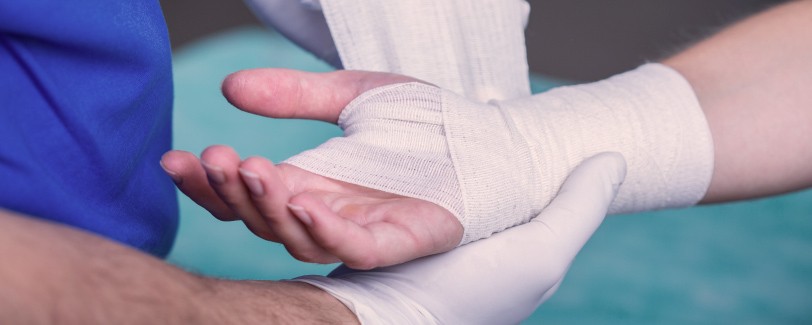
Post-surgical wound infections are one of the most common causes of delayed healing and hospital readmissions. Most patients recovering at home have no way to monitor early infection signs besides looking at the wound, even though serious complications often begin with hidden biomarker changes like temperature, moisture, or pH shifts.
Solution :
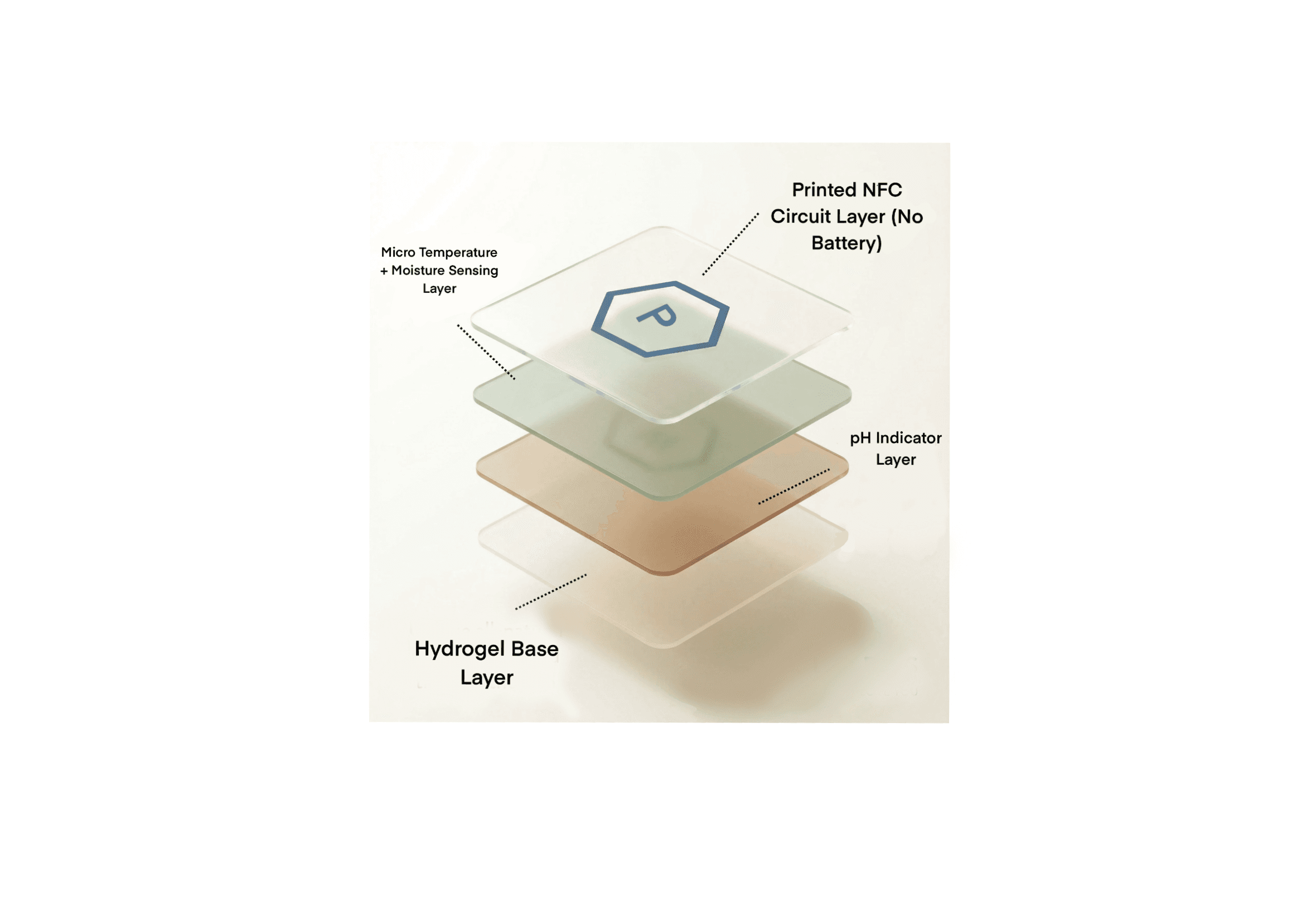
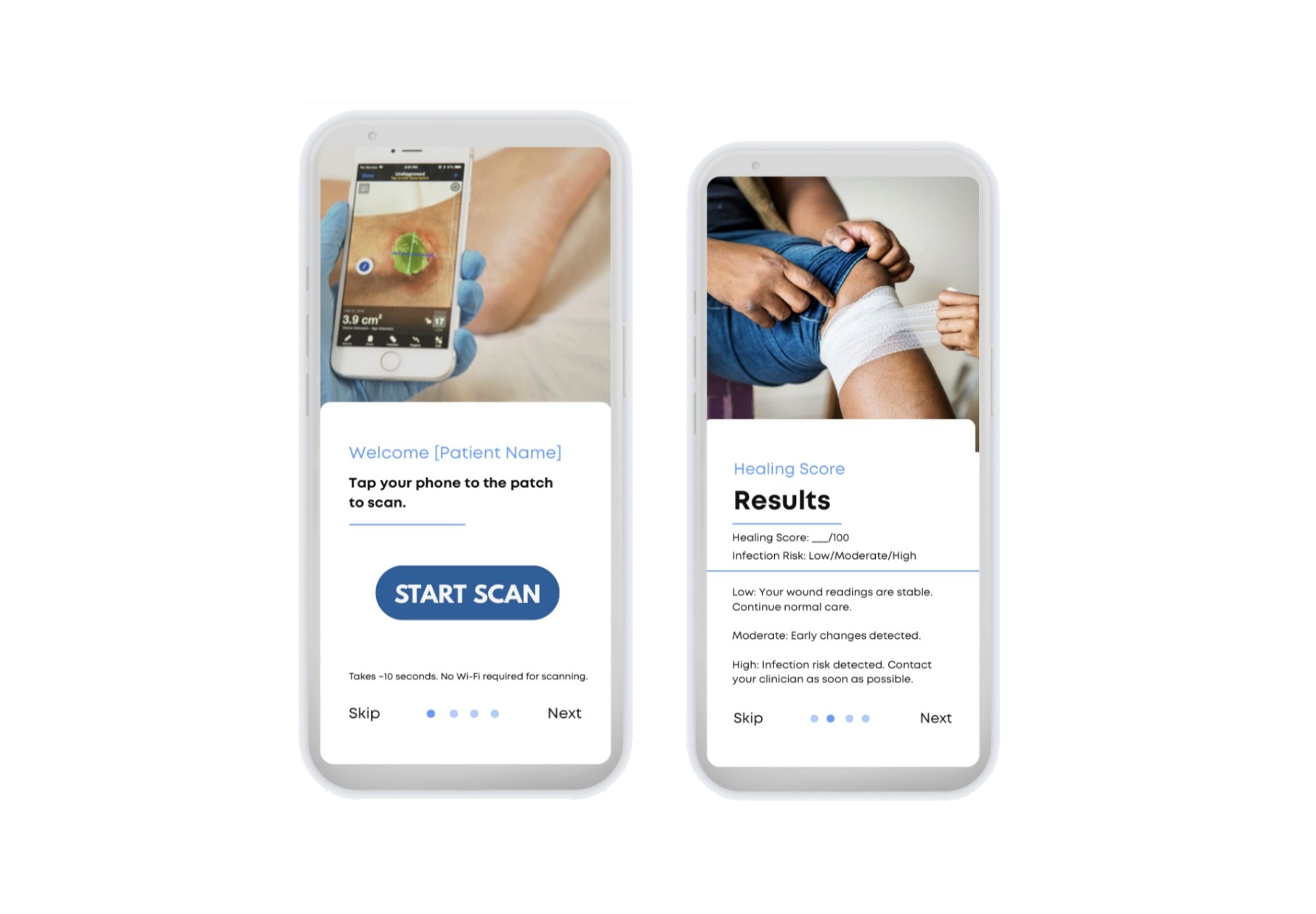
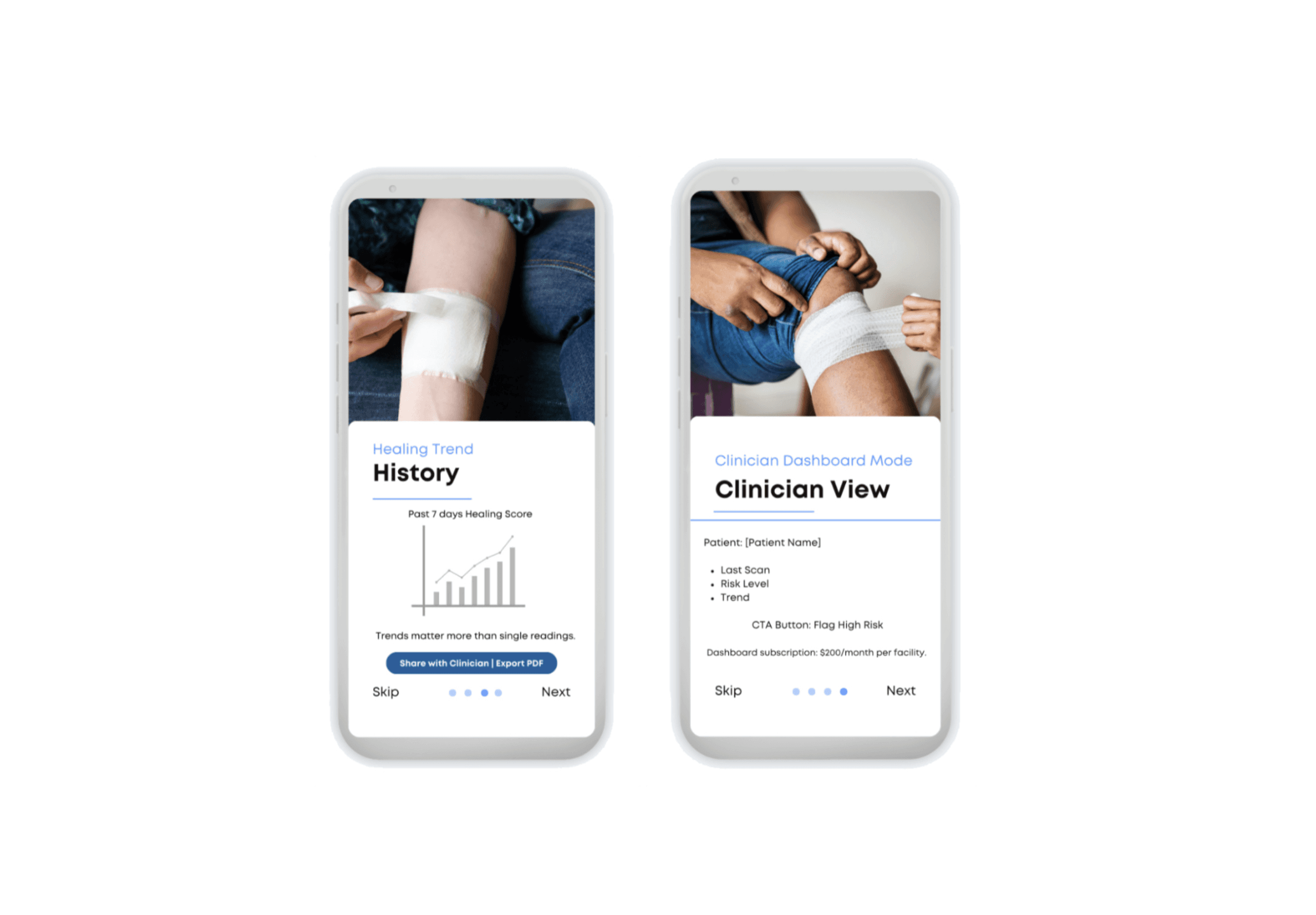
I designed WoundWatch, a scanner-style wound monitoring device concept built to detect early infection risk through multi-sensor tracking. I created a distinct 3D-printed scanner form factor meant for post-operative use and planned integration of temperature sensing, moisture monitoring, and pH-based detection to measure wound healing conditions. The device is designed to provide earlier warning signals than visual inspection alone, supporting safer recovery outside the hospital. Alongside the scanner, WoundWatch is supported by a companion app platform in development, built to provide patient and physician dashboards for ongoing recovery tracking and data-sharing between home and hospital.
Challenge :
WoundWatch required a completely different design approach from my cardiovascular projects. I had to think through new clinical workflows, different sensing needs, and a scanner-like shape that was both practical and medically realistic. Ensuring the concept was technically distinct while still feasible was a major part of development. Scaling the solution also required designing a business model that works directly with hospitals and surgical care organizations rather than individual consumers.
Summary :
Wound Watch showed me that effective healthcare innovation requires both strong engineering and thoughtful implementation. The project reinforced how combining hardware, data, and human-centered design can improve outcomes beyond the device itself. The project earned 2nd place out of 15 teams at a school-wide Shark Tank competition, reinforcing its clinical relevance and feasibility.
View WoundWatch here: https://drive.google.com/drive/folders/1-rcQ6zYF-QsxqgM05cVvr4a9dVG22hfs
More Projects

Technology
Wound Watch
Wound Watch is an AI-based medical startup that combines a portable biomedical scanner for detecting early wound infections with a staff training program to help hospitals improve post-care outcomes.
Year :
2024 - Present
Industry :
Healthcare
Project Duration :
1 year
Problem :
Post-surgical wound infections are one of the most common causes of delayed healing and hospital readmissions. Most patients recovering at home have no way to monitor early infection signs besides looking at the wound, even though serious complications often begin with hidden biomarker changes like temperature, moisture, or pH shifts.
Solution :
I designed WoundWatch, a scanner-style wound monitoring device concept built to detect early infection risk through multi-sensor tracking. I created a distinct 3D-printed scanner form factor meant for post-operative use and planned integration of temperature sensing, moisture monitoring, and pH-based detection to measure wound healing conditions. The device is designed to provide earlier warning signals than visual inspection alone, supporting safer recovery outside the hospital. Alongside the scanner, WoundWatch is supported by a companion app platform in development, built to provide patient and physician dashboards for ongoing recovery tracking and data-sharing between home and hospital.
Challenge :
WoundWatch required a completely different design approach from my cardiovascular projects. I had to think through new clinical workflows, different sensing needs, and a scanner-like shape that was both practical and medically realistic. Ensuring the concept was technically distinct while still feasible was a major part of development. Scaling the solution also required designing a business model that works directly with hospitals and surgical care organizations rather than individual consumers.
Summary :
Wound Watch showed me that effective healthcare innovation requires both strong engineering and thoughtful implementation. The project reinforced how combining hardware, data, and human-centered design can improve outcomes beyond the device itself. The project earned 2nd place out of 15 teams at a school-wide Shark Tank competition, reinforcing its clinical relevance and feasibility.
View WoundWatch here: https://drive.google.com/drive/folders/1-rcQ6zYF-QsxqgM05cVvr4a9dVG22hfs
More Projects
Technology
Wound Watch
Wound Watch is an AI-based medical startup that combines a portable biomedical scanner for detecting early wound infections with a staff training program to help hospitals improve post-care outcomes.
Year :
2024 - Present
Industry :
Healthcare
Project Duration :
1 year
Problem :
Post-surgical wound infections are one of the most common causes of delayed healing and hospital readmissions. Most patients recovering at home have no way to monitor early infection signs besides looking at the wound, even though serious complications often begin with hidden biomarker changes like temperature, moisture, or pH shifts.
Solution :
I designed WoundWatch, a scanner-style wound monitoring device concept built to detect early infection risk through multi-sensor tracking. I created a distinct 3D-printed scanner form factor meant for post-operative use and planned integration of temperature sensing, moisture monitoring, and pH-based detection to measure wound healing conditions. The device is designed to provide earlier warning signals than visual inspection alone, supporting safer recovery outside the hospital. Alongside the scanner, WoundWatch is supported by a companion app platform in development, built to provide patient and physician dashboards for ongoing recovery tracking and data-sharing between home and hospital.
Challenge :
WoundWatch required a completely different design approach from my cardiovascular projects. I had to think through new clinical workflows, different sensing needs, and a scanner-like shape that was both practical and medically realistic. Ensuring the concept was technically distinct while still feasible was a major part of development. Scaling the solution also required designing a business model that works directly with hospitals and surgical care organizations rather than individual consumers.
Summary :
Wound Watch showed me that effective healthcare innovation requires both strong engineering and thoughtful implementation. The project reinforced how combining hardware, data, and human-centered design can improve outcomes beyond the device itself. The project earned 2nd place out of 15 teams at a school-wide Shark Tank competition, reinforcing its clinical relevance and feasibility.
View WoundWatch here: https://drive.google.com/drive/folders/1-rcQ6zYF-QsxqgM05cVvr4a9dVG22hfs