Medical Device
HeatBeat
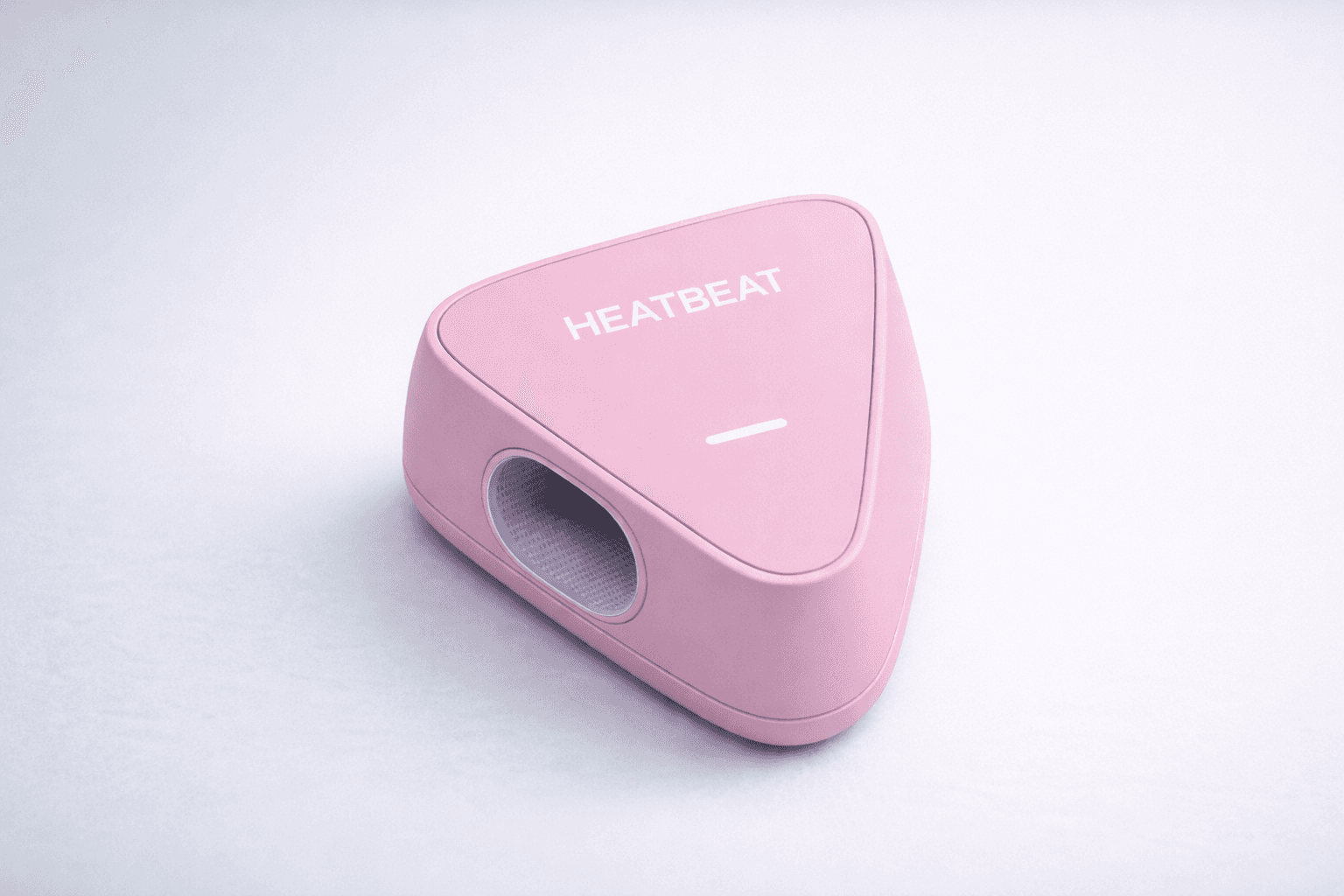
HeatBeat is a non-invasive cardiovascular screening innovation that uses fingertip thermal mapping and AI pattern recognition to detect early vascular dysfunction before symptoms appear.
Year :
2025 - Present
Industry :
Healthcare
Problem :
Cardiovascular disease is the leading cause of death worldwide, yet many people with early-stage vascular disease show no visible symptoms. By the time heart and vessel disease is detected through traditional methods such as stress testing or advanced imaging, significant and sometimes irreversible damage has often already occurred. Many screening tools are also expensive, invasive, or inaccessible for routine preventive care, creating a critical need for a low-cost, non-invasive way to identify cardiovascular risk earlier.

Solution :
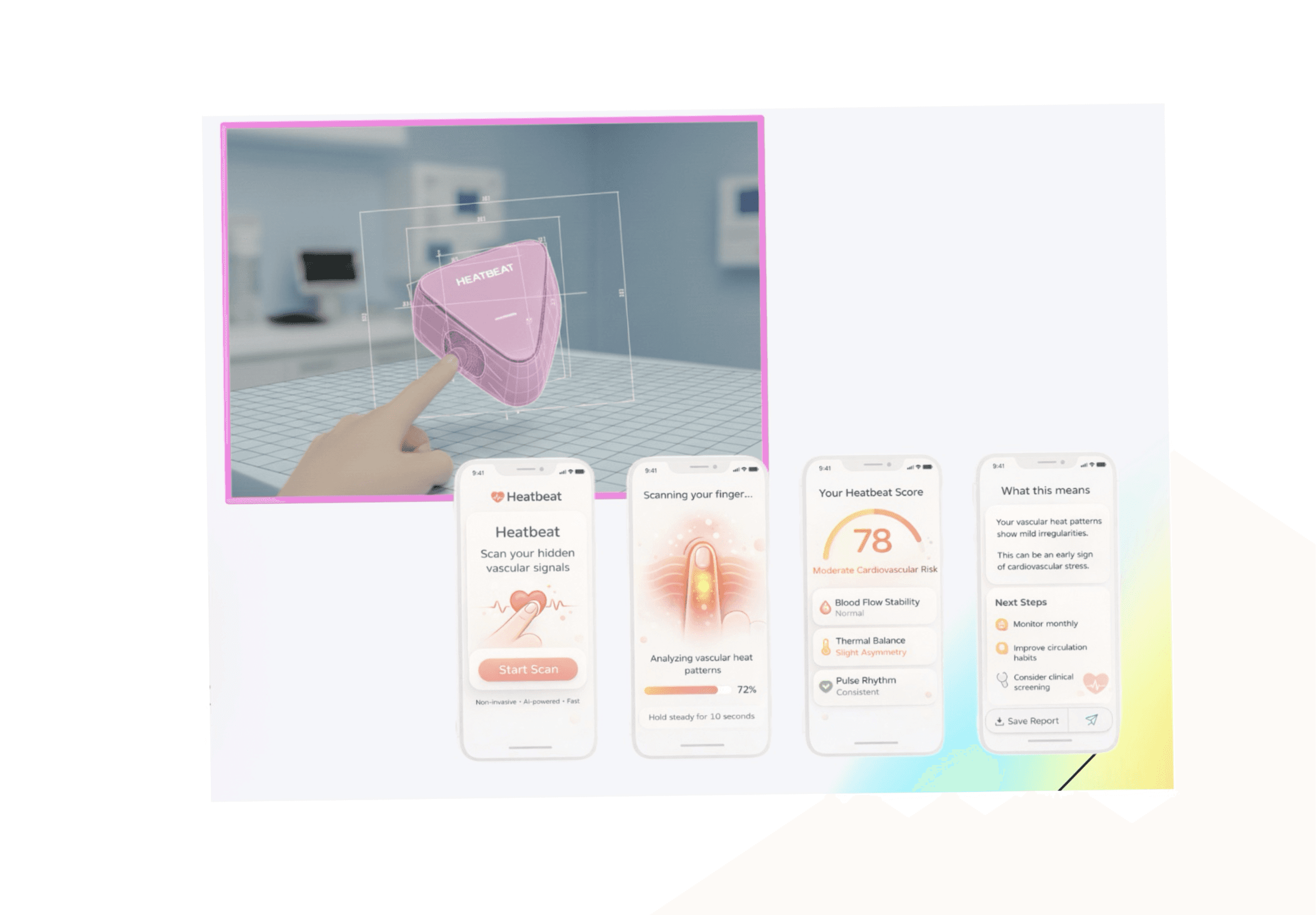
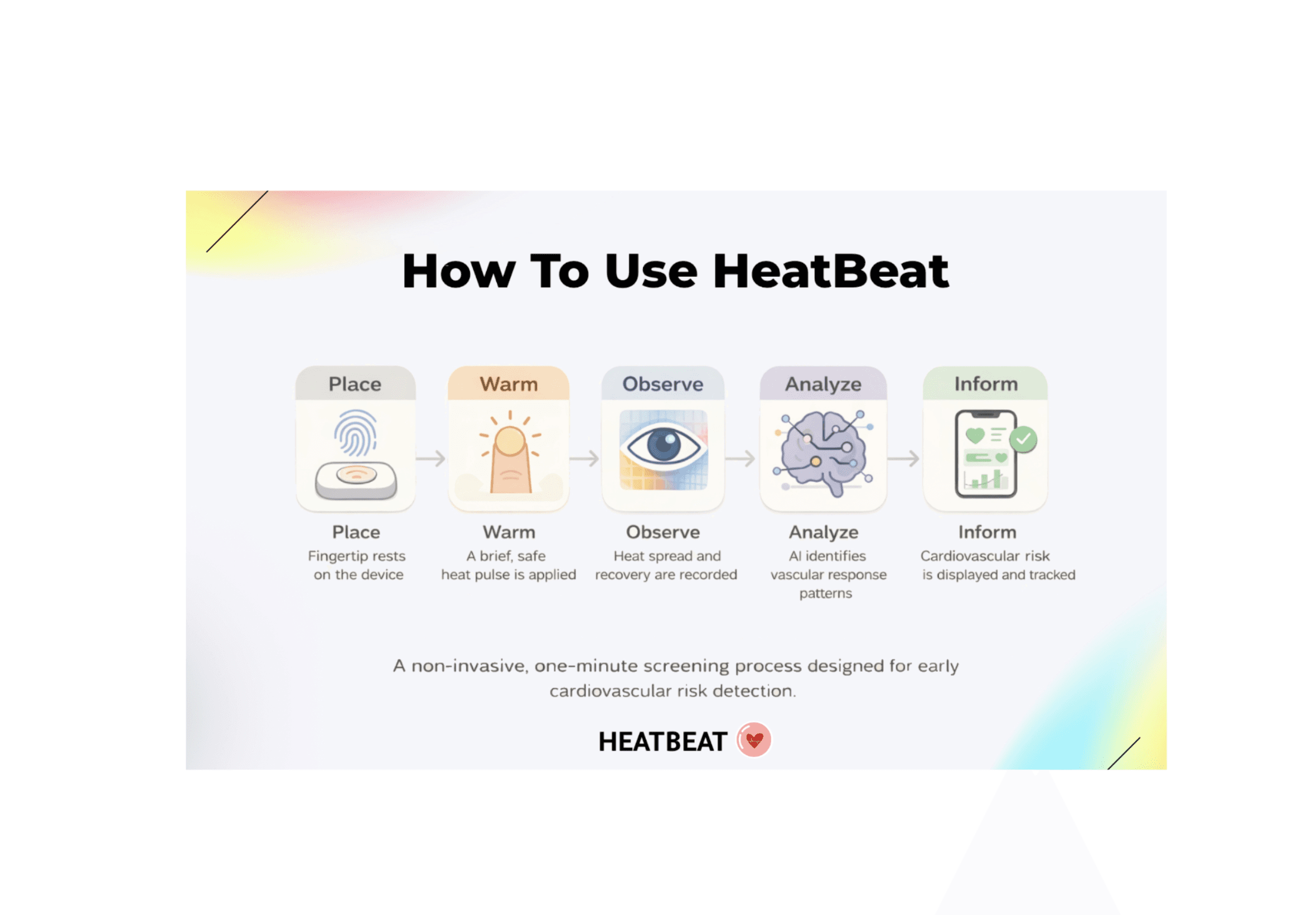
I developed HeatBeat, a handheld cardiovascular screening device concept that detects early vascular abnormalities by analyzing how heat moves through the fingertip. Blood vessels play a major role in regulating heat transfer through microvascular networks, and when vessels become stiffened or diseased, heat diffusion patterns subtly change even before symptoms appear. HeatBeat applies controlled thermal stimulation to the fingertip, captures thermal recovery and diffusion behavior through thermal mapping, and uses artificial intelligence pattern recognition to identify early cardiovascular risk signatures. The system analyzes metrics such as heat diffusion speed, recovery time, and left–right asymmetry, producing an accessible cardiovascular screening output in under a minute.
Challenge :
The key challenge was translating a subtle physiological phenomenon into a measurable screening signal. Heat transfer differences are small, and meaningful interpretation requires both consistent thermal data capture and intelligent computational analysis. Building HeatBeat meant designing a workflow that could reliably record fingertip heat response while developing an AI-based approach capable of detecting vascular patterns that are not easily visible through traditional evaluation methods.
Summary :
HeatBeat represents a new approach to cardiovascular prevention by shifting screening toward early, painless, and accessible detection. By combining fingertip thermal mapping with AI-driven vascular pattern analysis, the project highlights how non-invasive diagnostics can be integrated into routine care to identify at-risk individuals sooner, reduce healthcare costs, and support proactive heart health management.
More Projects





Medical Device
HeatBeat
HeatBeat is a non-invasive cardiovascular screening innovation that uses fingertip thermal mapping and AI pattern recognition to detect early vascular dysfunction before symptoms appear.
Year :
2025 - Present
Industry :
Healthcare
Problem :
Cardiovascular disease is the leading cause of death worldwide, yet many people with early-stage vascular disease show no visible symptoms. By the time heart and vessel disease is detected through traditional methods such as stress testing or advanced imaging, significant and sometimes irreversible damage has often already occurred. Many screening tools are also expensive, invasive, or inaccessible for routine preventive care, creating a critical need for a low-cost, non-invasive way to identify cardiovascular risk earlier.
Solution :
I developed HeatBeat, a handheld cardiovascular screening device concept that detects early vascular abnormalities by analyzing how heat moves through the fingertip. Blood vessels play a major role in regulating heat transfer through microvascular networks, and when vessels become stiffened or diseased, heat diffusion patterns subtly change even before symptoms appear. HeatBeat applies controlled thermal stimulation to the fingertip, captures thermal recovery and diffusion behavior through thermal mapping, and uses artificial intelligence pattern recognition to identify early cardiovascular risk signatures. The system analyzes metrics such as heat diffusion speed, recovery time, and left–right asymmetry, producing an accessible cardiovascular screening output in under a minute.
Challenge :
The key challenge was translating a subtle physiological phenomenon into a measurable screening signal. Heat transfer differences are small, and meaningful interpretation requires both consistent thermal data capture and intelligent computational analysis. Building HeatBeat meant designing a workflow that could reliably record fingertip heat response while developing an AI-based approach capable of detecting vascular patterns that are not easily visible through traditional evaluation methods.
Summary :
HeatBeat represents a new approach to cardiovascular prevention by shifting screening toward early, painless, and accessible detection. By combining fingertip thermal mapping with AI-driven vascular pattern analysis, the project highlights how non-invasive diagnostics can be integrated into routine care to identify at-risk individuals sooner, reduce healthcare costs, and support proactive heart health management.
More Projects
Medical Device
HeatBeat
HeatBeat is a non-invasive cardiovascular screening innovation that uses fingertip thermal mapping and AI pattern recognition to detect early vascular dysfunction before symptoms appear.
Year :
2025 - Present
Industry :
Healthcare
Problem :
Cardiovascular disease is the leading cause of death worldwide, yet many people with early-stage vascular disease show no visible symptoms. By the time heart and vessel disease is detected through traditional methods such as stress testing or advanced imaging, significant and sometimes irreversible damage has often already occurred. Many screening tools are also expensive, invasive, or inaccessible for routine preventive care, creating a critical need for a low-cost, non-invasive way to identify cardiovascular risk earlier.
Solution :
I developed HeatBeat, a handheld cardiovascular screening device concept that detects early vascular abnormalities by analyzing how heat moves through the fingertip. Blood vessels play a major role in regulating heat transfer through microvascular networks, and when vessels become stiffened or diseased, heat diffusion patterns subtly change even before symptoms appear. HeatBeat applies controlled thermal stimulation to the fingertip, captures thermal recovery and diffusion behavior through thermal mapping, and uses artificial intelligence pattern recognition to identify early cardiovascular risk signatures. The system analyzes metrics such as heat diffusion speed, recovery time, and left–right asymmetry, producing an accessible cardiovascular screening output in under a minute.
Challenge :
The key challenge was translating a subtle physiological phenomenon into a measurable screening signal. Heat transfer differences are small, and meaningful interpretation requires both consistent thermal data capture and intelligent computational analysis. Building HeatBeat meant designing a workflow that could reliably record fingertip heat response while developing an AI-based approach capable of detecting vascular patterns that are not easily visible through traditional evaluation methods.
Summary :
HeatBeat represents a new approach to cardiovascular prevention by shifting screening toward early, painless, and accessible detection. By combining fingertip thermal mapping with AI-driven vascular pattern analysis, the project highlights how non-invasive diagnostics can be integrated into routine care to identify at-risk individuals sooner, reduce healthcare costs, and support proactive heart health management.