Medical Device
NeuroLens
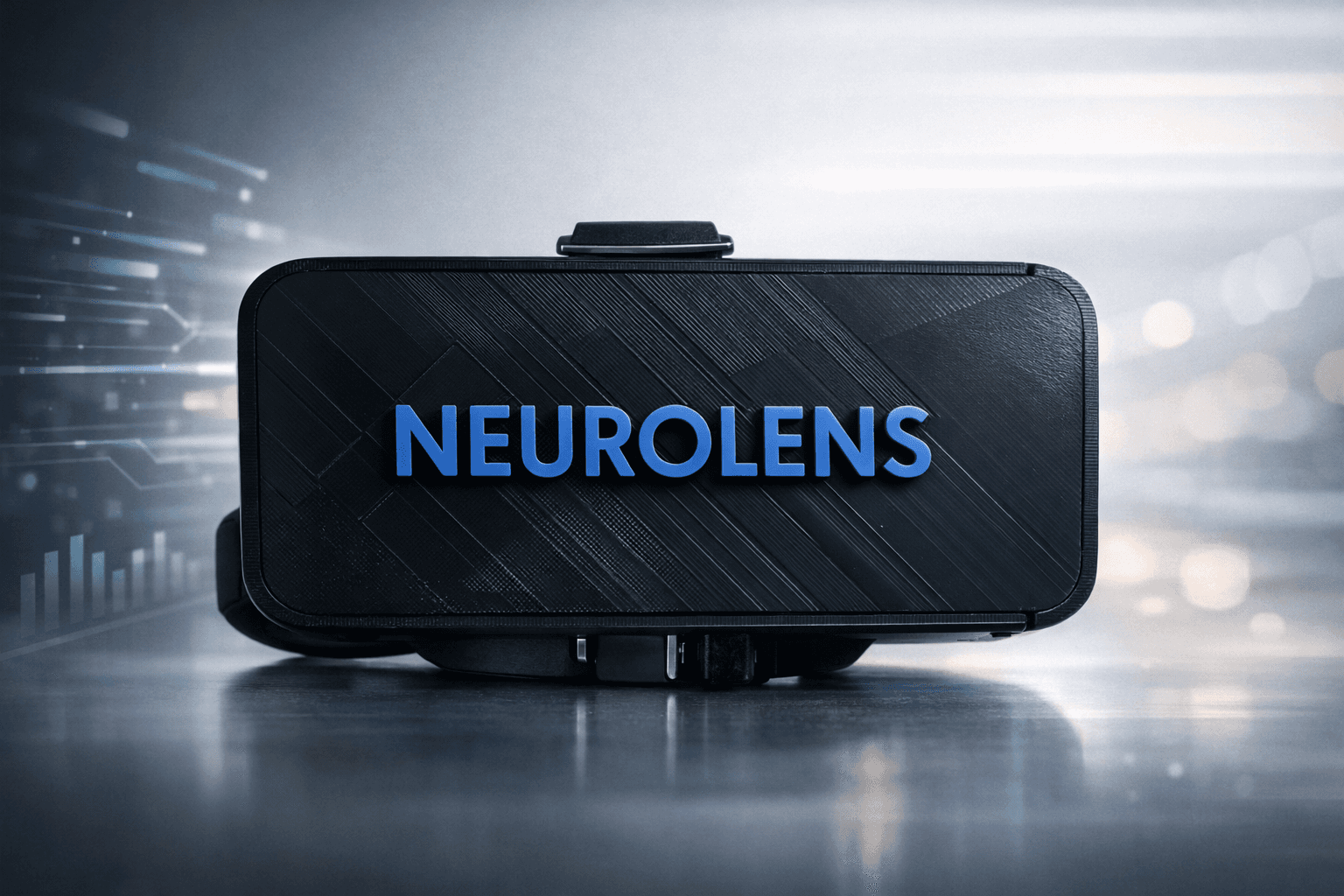
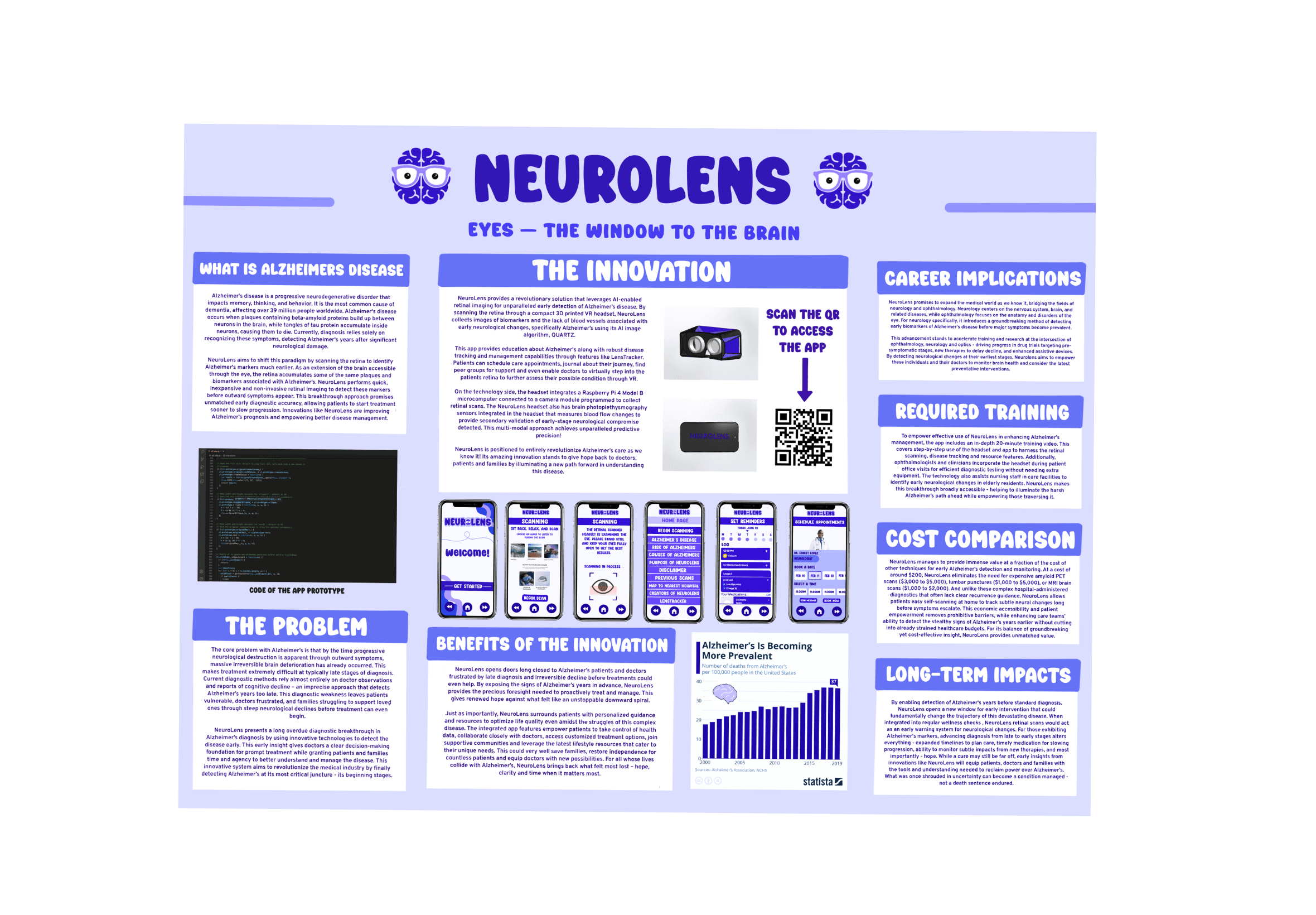
NeuroLens is a wearable screening prototype designed to identify early Alzheimer’s-related retinal biomarkers using non-invasive imaging and image analysis.
Year :
2023 - 2024
Industry :
Healthcare
Project Duration :
9 months
Problem :
Early detection of Alzheimer’s disease remains extremely difficult because most diagnostic pathways rely on expensive imaging tools, invasive testing, or clinical evaluation after symptoms have already progressed. For many patients, especially those in underserved communities, access to affordable neurological screening is limited. This delay in detection reduces the possibility of early intervention and preventative care.
Solution :
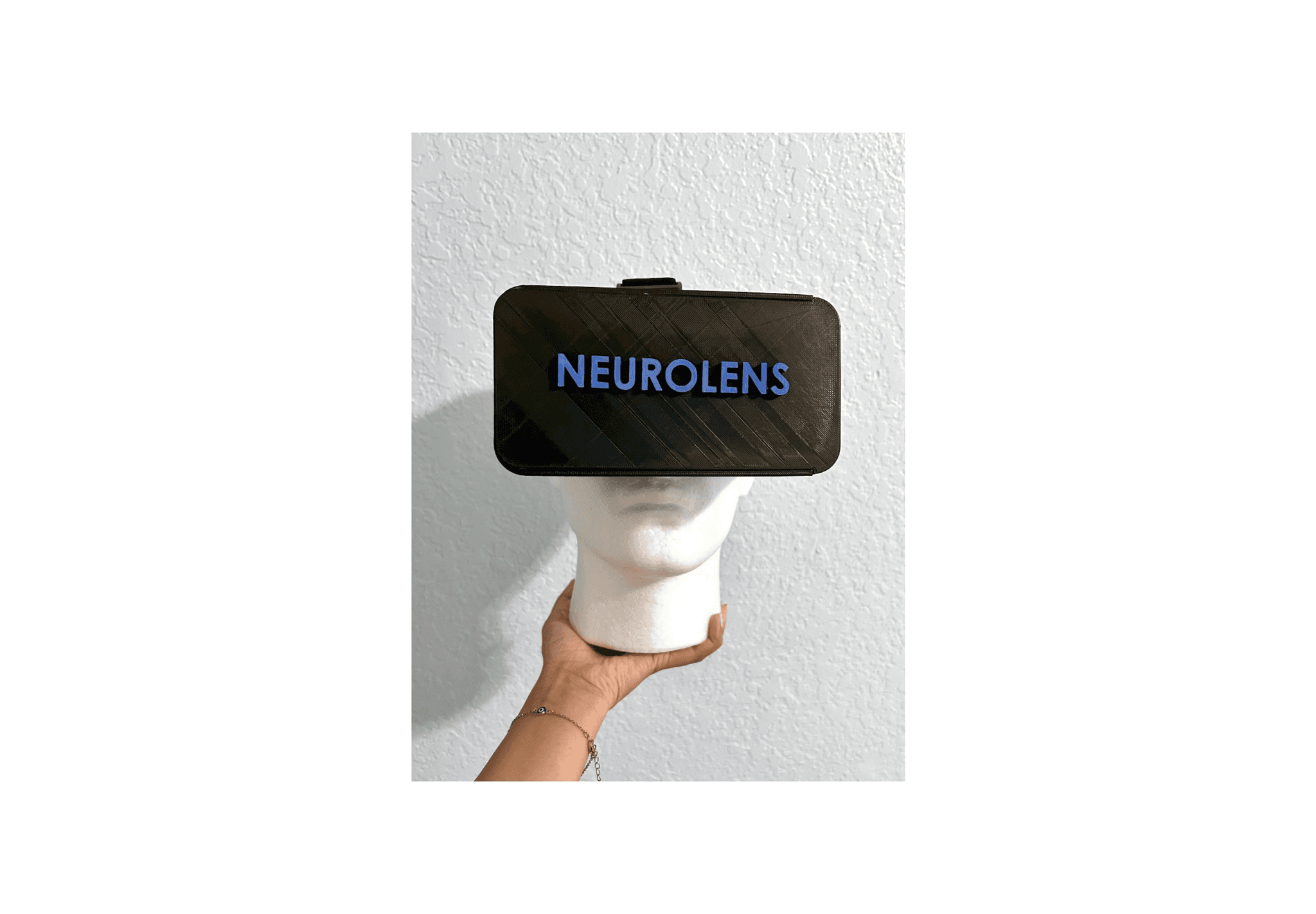
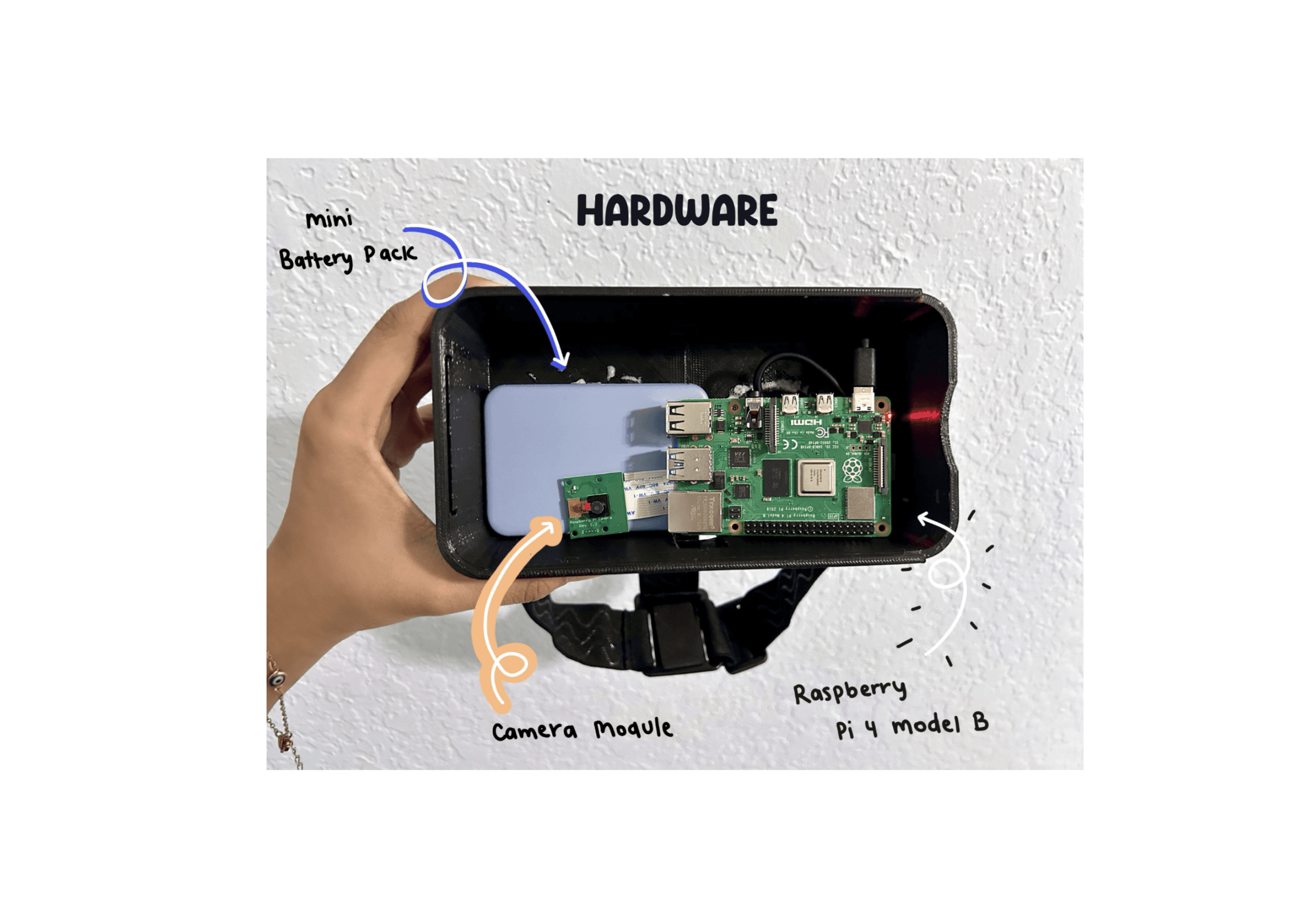
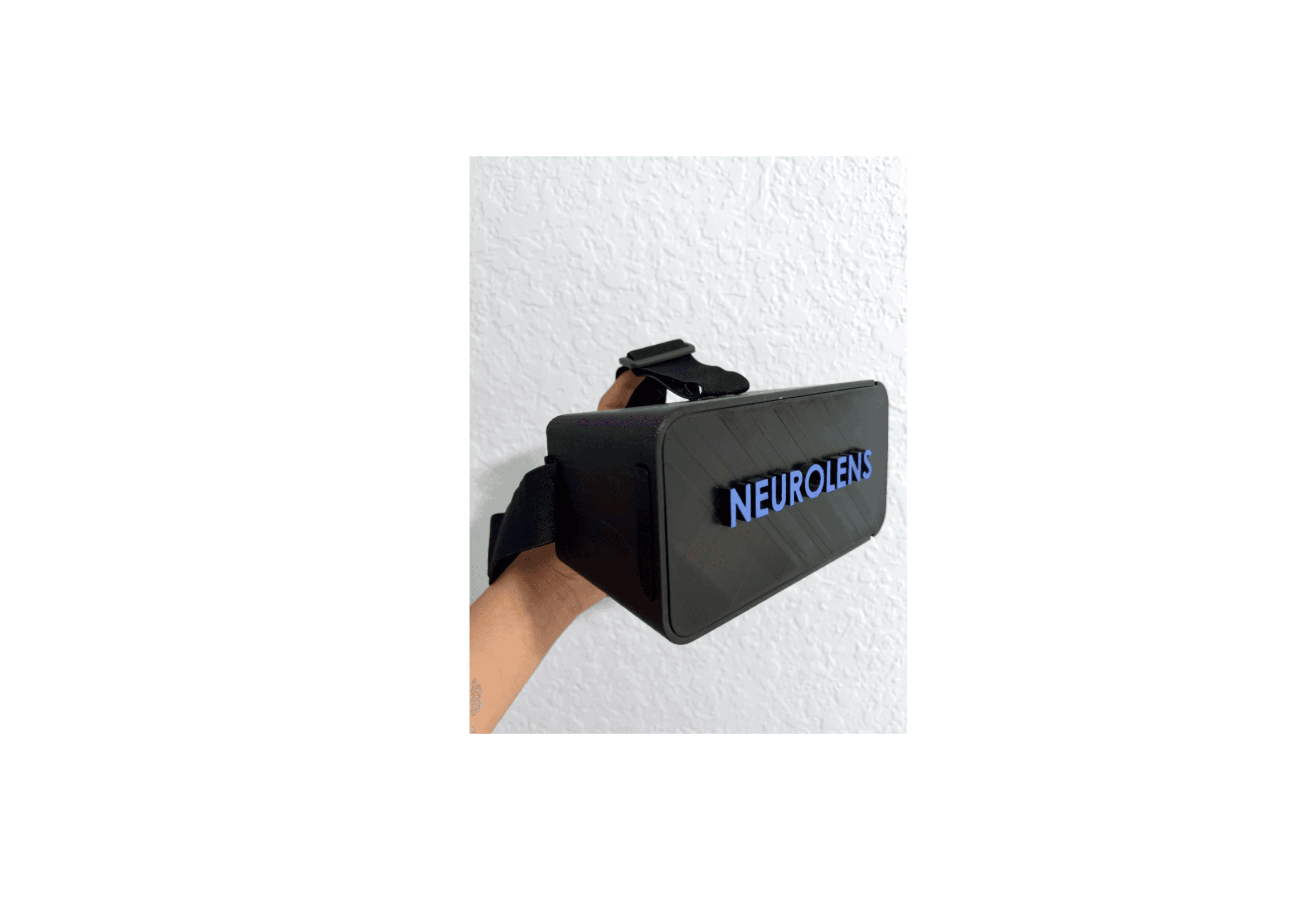
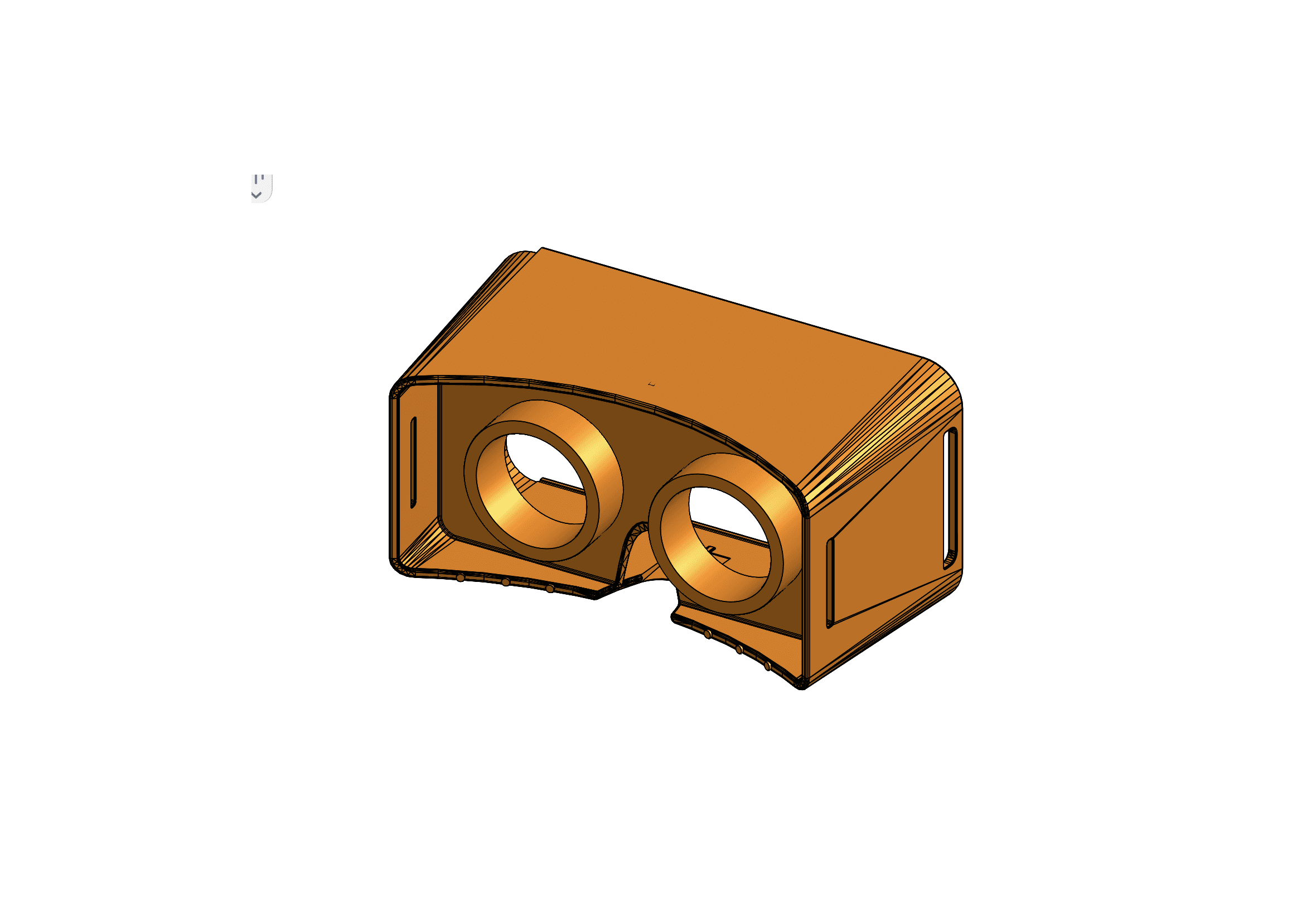
I designed NeuroLens, a 3D-printed retinal imaging headset that integrates a Raspberry Pi 4, a Pi Camera Module, and controlled LED illumination to capture high-resolution retinal images. The device uses computer vision pipelines built in Python, including OpenCV edge detection, contrast enhancement, and vessel segmentation techniques to analyze retinal vasculature patterns associated with early neurological decline. The headset was modeled in CAD, fabricated through iterative 3D printing, and optimized for stable optical alignment and wearable comfort.
Challenge :
The most difficult aspect was developing a prototype that balanced hardware accuracy with software reliability. Capturing consistent retinal images required precise camera positioning, controlled lighting, and repeated physical redesigns. On the computational side, retinal images contained noise and variability, so I refined feature extraction methods using NumPy-based processing and multiple image thresholding approaches to improve marker clarity. Translating biomedical research into a functional, low-cost engineering system required constant iteration across both software and hardware.
Summary :
NeuroLens combined embedded systems engineering, optical prototyping, and Python-based medical image analysis into an accessible screening concept for neurological disease. The project earned 1st place at the HOSA State Leadership Conference and placed top-15 internationally at HOSA ILC, highlighting its innovation and real-world diagnostic potential.
View NeuroLens here: https://drive.google.com/drive/folders/1jauuHjh7ygcFBsK5W0IS8x2RNqua97pf
More Projects


Medical Device
NeuroLens
NeuroLens is a wearable screening prototype designed to identify early Alzheimer’s-related retinal biomarkers using non-invasive imaging and image analysis.
Year :
2023 - 2024
Industry :
Healthcare
Project Duration :
9 months
Problem :
Early detection of Alzheimer’s disease remains extremely difficult because most diagnostic pathways rely on expensive imaging tools, invasive testing, or clinical evaluation after symptoms have already progressed. For many patients, especially those in underserved communities, access to affordable neurological screening is limited. This delay in detection reduces the possibility of early intervention and preventative care.
Solution :
I designed NeuroLens, a 3D-printed retinal imaging headset that integrates a Raspberry Pi 4, a Pi Camera Module, and controlled LED illumination to capture high-resolution retinal images. The device uses computer vision pipelines built in Python, including OpenCV edge detection, contrast enhancement, and vessel segmentation techniques to analyze retinal vasculature patterns associated with early neurological decline. The headset was modeled in CAD, fabricated through iterative 3D printing, and optimized for stable optical alignment and wearable comfort.
Challenge :
The most difficult aspect was developing a prototype that balanced hardware accuracy with software reliability. Capturing consistent retinal images required precise camera positioning, controlled lighting, and repeated physical redesigns. On the computational side, retinal images contained noise and variability, so I refined feature extraction methods using NumPy-based processing and multiple image thresholding approaches to improve marker clarity. Translating biomedical research into a functional, low-cost engineering system required constant iteration across both software and hardware.
Summary :
NeuroLens combined embedded systems engineering, optical prototyping, and Python-based medical image analysis into an accessible screening concept for neurological disease. The project earned 1st place at the HOSA State Leadership Conference and placed top-15 internationally at HOSA ILC, highlighting its innovation and real-world diagnostic potential.
View NeuroLens here: https://drive.google.com/drive/folders/1jauuHjh7ygcFBsK5W0IS8x2RNqua97pf
More Projects
Medical Device
NeuroLens
NeuroLens is a wearable screening prototype designed to identify early Alzheimer’s-related retinal biomarkers using non-invasive imaging and image analysis.
Year :
2023 - 2024
Industry :
Healthcare
Project Duration :
9 months
Problem :
Early detection of Alzheimer’s disease remains extremely difficult because most diagnostic pathways rely on expensive imaging tools, invasive testing, or clinical evaluation after symptoms have already progressed. For many patients, especially those in underserved communities, access to affordable neurological screening is limited. This delay in detection reduces the possibility of early intervention and preventative care.
Solution :
I designed NeuroLens, a 3D-printed retinal imaging headset that integrates a Raspberry Pi 4, a Pi Camera Module, and controlled LED illumination to capture high-resolution retinal images. The device uses computer vision pipelines built in Python, including OpenCV edge detection, contrast enhancement, and vessel segmentation techniques to analyze retinal vasculature patterns associated with early neurological decline. The headset was modeled in CAD, fabricated through iterative 3D printing, and optimized for stable optical alignment and wearable comfort.
Challenge :
The most difficult aspect was developing a prototype that balanced hardware accuracy with software reliability. Capturing consistent retinal images required precise camera positioning, controlled lighting, and repeated physical redesigns. On the computational side, retinal images contained noise and variability, so I refined feature extraction methods using NumPy-based processing and multiple image thresholding approaches to improve marker clarity. Translating biomedical research into a functional, low-cost engineering system required constant iteration across both software and hardware.
Summary :
NeuroLens combined embedded systems engineering, optical prototyping, and Python-based medical image analysis into an accessible screening concept for neurological disease. The project earned 1st place at the HOSA State Leadership Conference and placed top-15 internationally at HOSA ILC, highlighting its innovation and real-world diagnostic potential.
View NeuroLens here: https://drive.google.com/drive/folders/1jauuHjh7ygcFBsK5W0IS8x2RNqua97pf